
Shell scripts are a fundamental part of the OS X programming environment. As a ubiquitous feature of UNIX and UNIX-like operating systems, they represent a way of writing certain types of command-line tools in a way that works on a fairly broad spectrum of computing platforms. If you would rather get the weekly newsletter by email, you can subscribe to the Scripting OS X Weekly Newsletter here!! (Same content, delivered to your Inbox once a week.) On Scripting OS X. Ten Years of Scripting OS X; News and Opinion “We are giddy”—interviewing Apple about its Mac silicon revolution – Samuel Axon, Ars Technica. AppleScript is a scripting language developed by Apple to help people automate their work processes on the Mac operating system. It accomplishes this by exposing every element of the system’s applications as an object in an extremely simple, English-like language. AppleScript is to the Mac OS as JavaScript is to browsers.
'The Finder is the default file manager and graphical user interface shell used on all Macintosh operating systems. Described in its 'About' window as 'The Macintosh Desktop Experience', it is responsible for the launching of other applications, and for the overall user management of files, disks, and network volumes. It was introduced with the first Macintosh computer, and also exists as part of GS/ OS on the Apple IIGS. It was totally rewritten with the release of Mac OS X in 2001. In a tradition dating back to the classic Mac OS of the 1980s and 1990s, the Finder icon is the smiling screen of a computer, known as the Happy Mac logo.' [Finder (software). Wikipedia]
The GUI example 'OS X 10.10 Yosemite - Finder window' was created using the ConceptDraw PRO diagramming and vector drawing software extended with the Mac OS User Interface solution from the Software Development area of ConceptDraw Solution Park.
Script Editor User Guide
In OS X 10.10 or later, you can use the scripting language JavaScript for Automation, as well as AppleScript, to write your scripts. You can also use shell scripts and third-party scripting languages, such as UserTalk, to write scripts.

Choose your scripting language

In the Script Editor app on your Mac, click the Script Language pop-up menu in the toolbar, then choose a language.
Choose your default scripting language
Scripting Tool For Mac Os X High Sierra
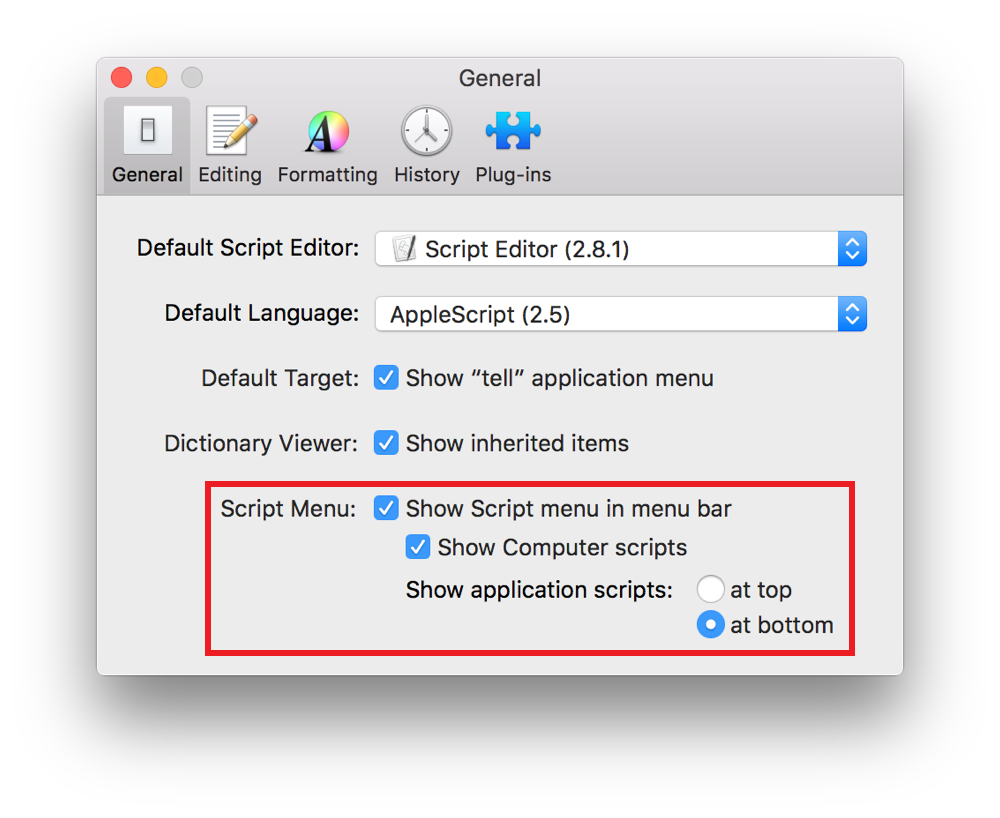
In the Script Editor app on your Mac, choose Script Editor > Preferences, then click General.
Click the Default Language pop-up menu, then choose a scripting language.